


Starlab Sustainability Weeks 2026: Sustainability remains a top priority in laboratories.

Ambassador:
Vanessa Whight
Marketing Manager/Green Officer, Starlab
Category: Sustainability/Lab World
Date: 27/06/2026
Reading time: 5 min
Over 90 events across Europe and a global webinar: the lab community sets clear priorities on circular economy, recycling and reducing plastics.
With more than 90 local events across Europe and a global webinar, the 2026 Starlab Sustainability Weeks once again underscored the strong demand for practical, science-ready sustainability solutions in laboratories. The programme connected customers and employees across key markets and mirrored the findings of the latest Mood Barometer: sustainability remains a top priority for a majority of labs. Discussions focused on plastic reduction, recycled materials, and closed-loop systems – translating strategic intent into tangible action.
With the 2026 Sustainability Weeks, Starlab once again brought together customers, employees, and sustainability enthusiasts across Europe. More than 90 local events and a global webinar demonstrated that interest in sustainable laboratory solutions remains strong. The Starlab Sustainability Weeks have become an established platform for exchanging ideas and experiences around sustainable laboratory practices. In 2026, Starlab once again used the initiative to connect customers and employees across Europe and foster discussions on topics such as plastic reduction, recycling, and the circular economy.
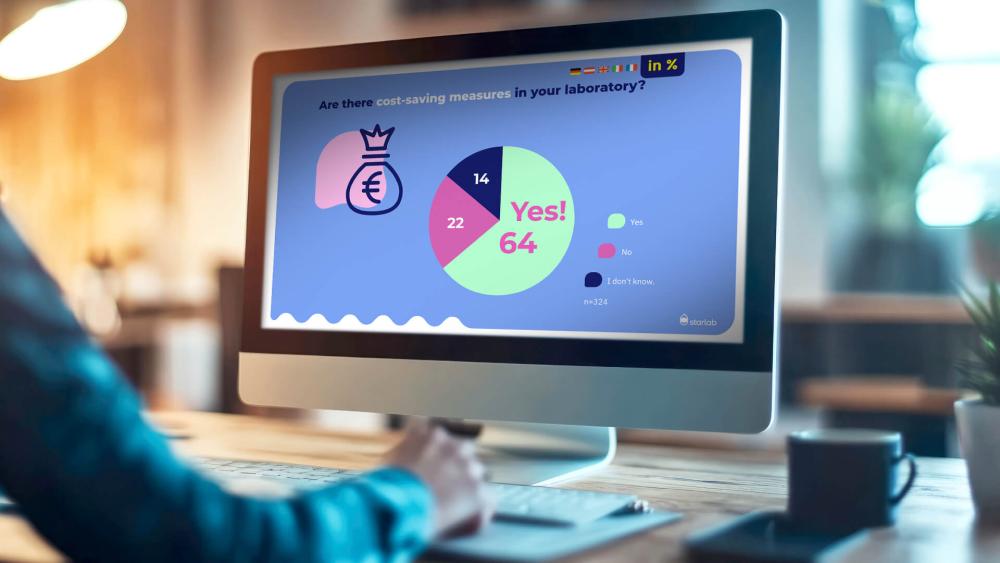
The topics addressed during the Starlab Sustainability Weeks reflected those in the latest Mood Barometer. The survey gathered insights from 368 laboratory professionals across Austria, France, Germany, Italy, Switzerland, and the United Kingdom. Fifty‑nine percent of respondents identified sustainability as one of the most important future topics for their laboratories.
“The results of our Mood Barometer clearly show that sustainability remains a key priority for many laboratories,” says Vanessa Whight, Marketing Manager and Starlab Group Green Officer. “With the Sustainability Weeks, we create a space where we can listen, exchange experiences, and work together to identify practical solutions."
The Starlab Sustainability Weeks focused on the topics voted most relevant to laboratory professionals in the Mood Barometer. Discussions covered ways to reduce plastic consumption, the use of recycled materials, and the role of recycling programmes and closed‑loop systems. These topics were explored further during the webinar Lab Plastics at a Turning Point, which combined survey insights with interactive discussions.
One of the highlights of the Starlab Sustainability Weeks was Starlab’s closed‑loop model. Using a specially designed LEGO model, participants were able to visualise how used laboratory consumables can be collected, recycled, and reintroduced into the material cycle. The model proved to be a major attraction at many locations, helping to make the closed‑loop concept easy to understand and engage with.
The Mood Barometer results paint a clear picture of laboratory priorities. Respondents identified reducing plastic consumption per product, increasing the use of recycled materials in products and packaging, and adopting reusable or recyclable products as the most important sustainability measures. At the same time, costs, time requirements, limited information, and concerns about product quality were cited as the biggest barriers to implementing more sustainable practices.
“The discussions during the Sustainability Weeks showed that the willingness to embrace change is clearly there,” emphasises Lennart Walter, Product Manager and Project Lead of the TipOne Recycling Programme. “Many laboratories are not looking for theoretical concepts. They are looking for solutions that combine sustainability, scientific quality, and practical usability. That is exactly where our closed‑loop approach makes a difference.”
The Starlab Sustainability Weeks took place across Europe, with 58 events in the UK, 20 in Germany, eight in France, and five in Italy. They were made possible by our passionate local sales teams and their strong customer relationships. These on‑site activities were complemented by local presentations and webinars that will continue beyond the official campaign period, helping to maintain strong momentum.
The popularity of the Starlab Sustainability Weeks was particularly evident in the UK, where around 2,600 cacti were distributed to participants. Planting the cacti in TipOne racks was once again used to symbolise “reuse and refill” in the laboratory. Together with the closed‑loop LEGO model, they helped spark numerous discussions about more sustainable laboratory processes and practical actions that can be implemented in everyday laboratory work.
The high level of participation in the webinar, combined with the feedback received during local events, demonstrates that interest in sustainable laboratory solutions remains strong. By linking the latest findings from the Mood Barometer with meaningful dialogue and practical examples, the Starlab Sustainability Weeks continue to provide a platform where challenges can be transformed into shared solutions.
A closing plea.
The mood in Europe's laboratories may be cloudy and sometimes it takes rain for something to grow. However, sustainability, cooperation and a willingness to innovate have already been sown. The laboratories have the tools, the will and the knowledge. Now they need the right framework conditions, and the courage to question existing structures and change them themselves.
Behind the scenes: our press conference.
What an eventful start to March it was – our virtual press conference, supported by our communication agency, brought lively dialogue and pure passion for science.
The live recording.
Immerse yourself in the Starlab presentation, with further insights shared on press release day.
Tips and more.
Sustainable Lab Practices.
Discover the University of Manchester & Starlab Recycling Service Interview.